

|
This post may contain affiliate links, which means that we may receive a commission if you make a purchase using these links. As an Amazon Associate, we earn commission from qualifying purchases.
There’s a reason grilling has such a devoted following, it turns an ordinary dinner into an event, fills the backyard with a smell that pulls everyone outside, and gives you a level of flavor that’s genuinely hard to replicate indoors. But if you’re just getting started, the sheer number of grills, tools, and accessories on the market can make it feel more complicated than it needs to be.
The truth is you don’t need a professional setup to grill well, you need the right foundational equipment and a few tools that make the process easier and safer. This guide walks through everything worth having to start grilling at home with confidence.
1. The Right Grill for Your Needs
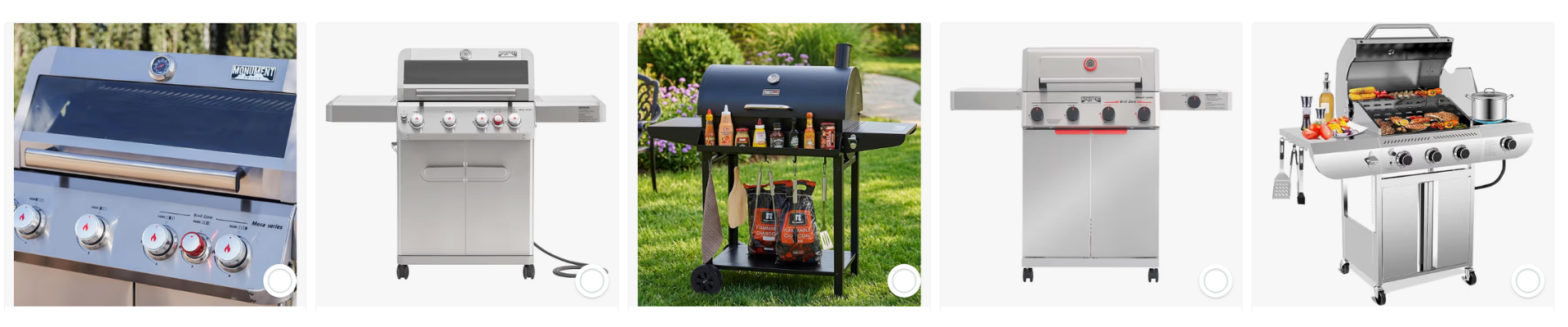
This is the most important decision in your entire setup, and it comes down to choosing between charcoal , gas , and pellet grills, each offering a different experience. Charcoal grills produce that classic smoky flavor many people associate with “real” grilling, but they require more time to heat up and more hands-on management of temperature throughout the cook. Gas grills , on the other hand, offer convenience and quick, consistent heat with the turn of a dial, making them a popular choice for beginners who want reliable results without a steep learning curve.
Pellet grills split the difference, offering wood-fired flavor with much of the convenience of a gas grill, since they use an electric auger to automatically feed wood pellets and maintain a set temperature. When choosing, think honestly about how often you’ll actually use it and what kind of experience you want, if you love the process and don’t mind the extra effort, charcoal might suit you best, but if you want to grill on a random Tuesday without a lot of setup, gas or pellet will serve you better long term. Size matters too, choose a grill with enough surface area for how many people you typically cook for, with a bit of extra room for larger gatherings.
2. A Reliable Meat Thermometer
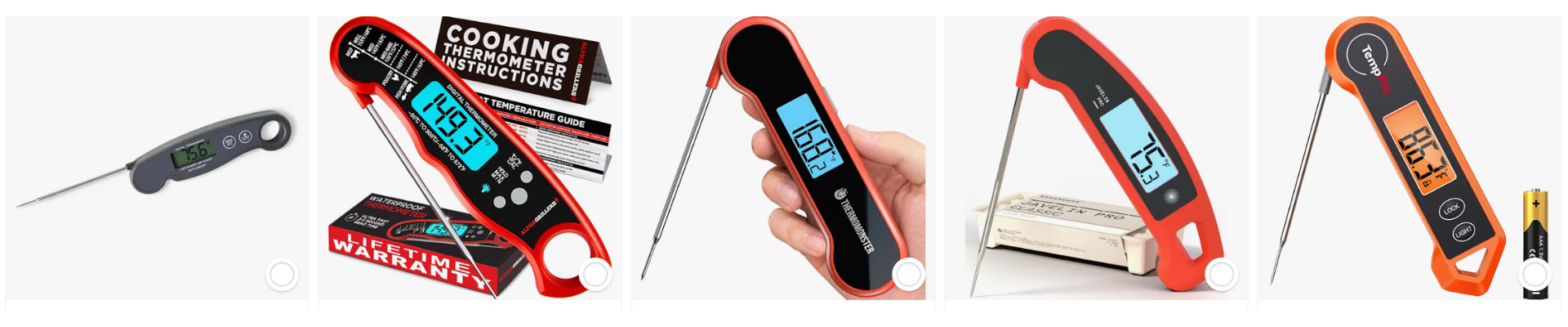
Guessing whether meat is done by cutting into it or pressing on it with your finger is one of the most common ways beginners either undercook or overcook their food. An instant-read digital meat thermometer takes the guesswork out entirely, giving you an accurate internal temperature reading in seconds so you know exactly when your food has hit a safe, properly cooked temperature without slicing it open and losing juices in the process.
Beyond food safety, a thermometer is genuinely the biggest lever for consistently great results, since the difference between a perfectly juicy chicken breast and a dry, overcooked one often comes down to just a few degrees. Look for one with a fast read time and a probe thin enough to avoid leaving large holes in smaller cuts of meat. Some grillers also invest in a leave-in probe thermometer with a wireless display, which lets you monitor temperature from a distance without repeatedly opening the lid and losing heat.
3. A Quality Grill Brush
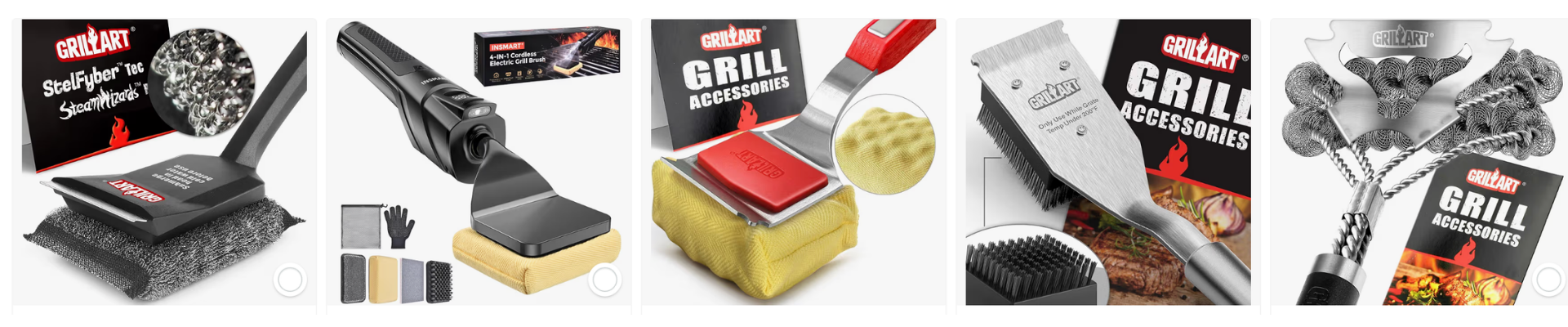
A clean grill isn’t just about hygiene, it directly affects how your food cooks and tastes. Leftover charred residue from previous cooks can stick to new food, affect flavor, and even cause uneven heating in certain spots on the grates. A sturdy grill cleaning brush with stiff bristles makes quick work of this buildup, and cleaning your grates while they’re still warm, right after cooking, is significantly easier than trying to scrape off cooled, hardened residue later.
Look for a brush with a long handle to keep your hand a safe distance from the heat, and consider a bristle-free design if you’re concerned about wire bristles potentially breaking off and ending up in food, which has become a more common consideration in recent years. Pairing your brush with a scraper tool gives you an extra edge for stubborn spots, and a few minutes of maintenance after each use will extend the life of your grill grates considerably.
4. Long-Handled Grilling Tools
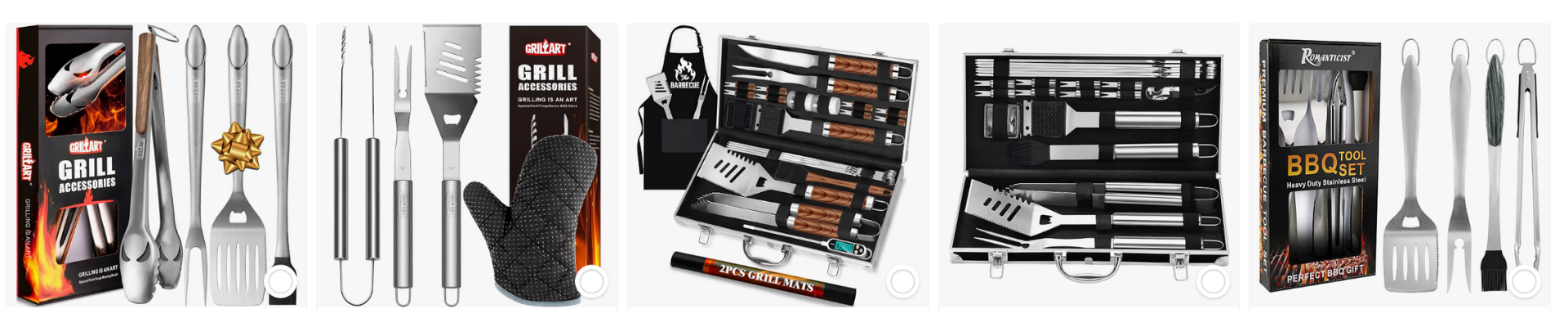
Standard kitchen tongs and spatulas simply aren’t built for the heat and distance involved in grilling. A dedicated set of long-handled grilling tools , typically including tongs, a spatula, and a fork, keeps your hands a safe distance from direct heat while still giving you the control needed to flip, move, and serve food confidently. Stainless steel construction tends to hold up best against high heat and repeated use without warping or degrading over time.
Beyond safety, the right tools also make a real difference in technique. A wide, sturdy spatula is essential for flipping delicate items like fish or burgers without them falling apart, while sharp, well-gripping tongs give you more precise control than trying to awkwardly maneuver food with kitchen tongs designed for a stovetop. Many grilling tool sets come with a carrying case or hanging rack, which keeps everything organized and easy to grab each time you fire up the grill.
5. A Chimney Starter (For Charcoal Grilling)
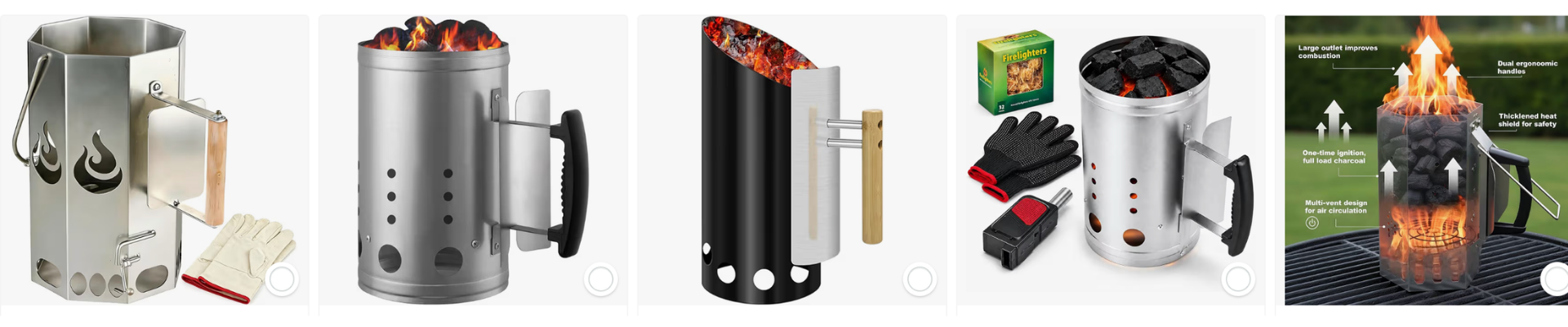
If you’ve chosen a charcoal grill, a chimney starter is one of the most useful tools you can own. It allows you to light charcoal quickly and evenly without relying on lighter fluid, which can leave a chemical aftertaste on your food if not fully burned off before cooking. Simply fill the chimney with charcoal, light some newspaper or a fire starter underneath, and within about 15 to 20 minutes you’ll have evenly lit coals ready to pour directly into your grill.
This method is not only cleaner and better-tasting than lighter fluid, it’s also considerably safer, since it removes the need to handle and pour flammable liquid near an open flame. Look for a chimney starter with a heat-resistant handle and a sturdy base, and store it somewhere dry between uses to prevent rust from developing on the metal over time.
6. Heat-Resistant Grilling Gloves
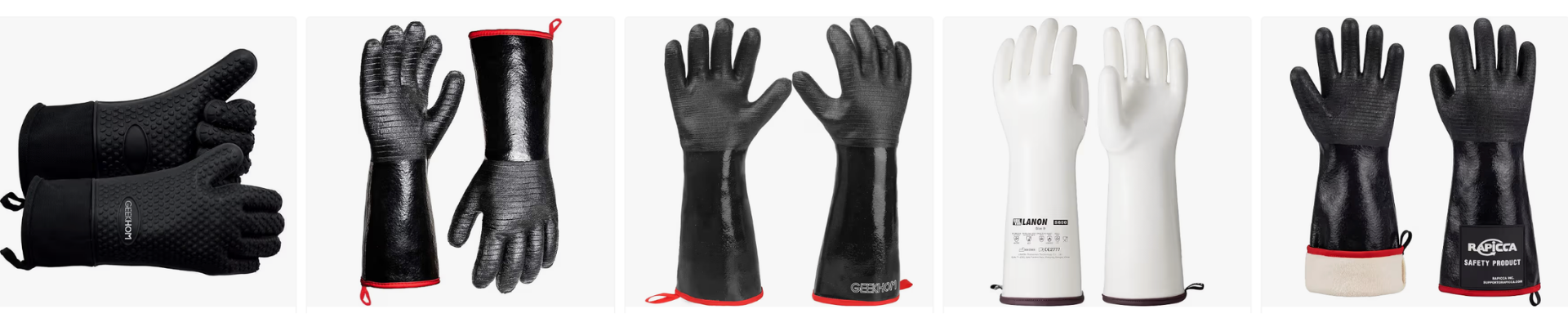
Standard oven mitts aren’t designed for the higher, more direct heat you’ll encounter while grilling, particularly when adjusting coals, moving hot grates, or handling a chimney starter full of lit charcoal. A pair of heat-resistant grilling gloves , rated specifically for high temperatures, gives you the protection and dexterity needed to handle hot equipment confidently without constantly worrying about burns.
Look for gloves made from materials like silicone-coated fabric or treated leather , both of which offer solid heat resistance while still allowing enough grip and flexibility to actually maneuver tools and food. This is a small purchase, but one that removes a genuine safety concern from the grilling process, especially useful for beginners still getting comfortable working around an open flame or hot coals.
7. A Meat Injector or Marinade Brush
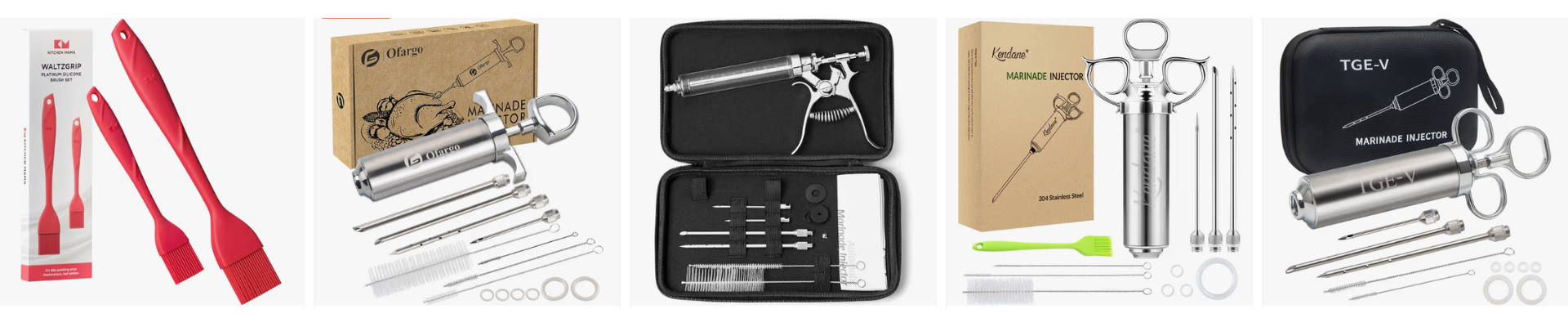
Flavor doesn’t just come from what’s on the surface of your meat, and a meat injector lets you push marinade directly into thicker cuts, ensuring flavor throughout rather than just on the outer layer. This is particularly useful for larger cuts like whole chickens, pork shoulders, or briskets, where surface-level seasoning alone doesn’t fully penetrate the meat during the cook time.
For simpler needs, a basting brush or marinade brush is a more accessible starting point, letting you apply sauces, marinades, or butter throughout the cooking process to build layers of flavor and keep food from drying out. Silicone brushes are generally preferred over natural bristle ones, since they’re easier to clean, more heat resistant, and don’t shed bristles into your food over time.
8. A Two-Zone Grilling Setup (Grill Basket or Zone Divider)
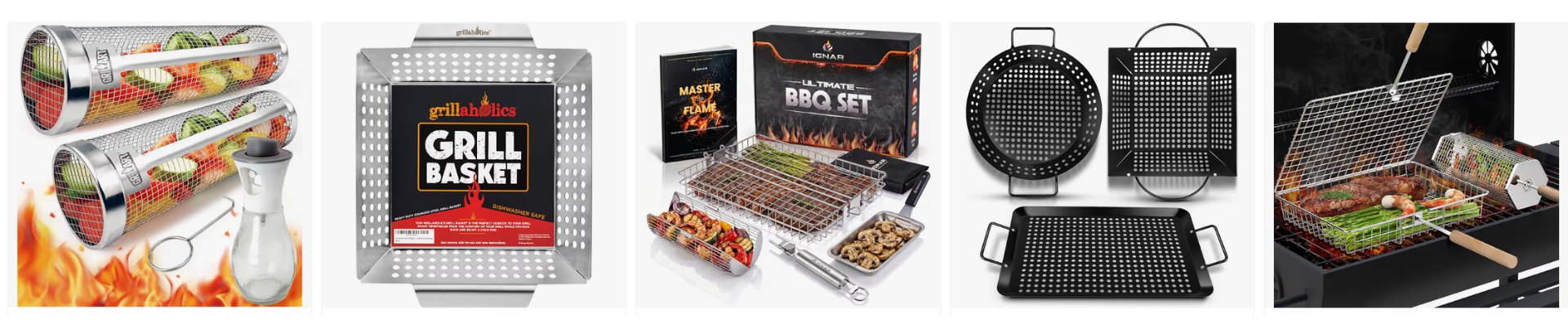
One of the most valuable techniques beginners can learn is two-zone cooking, creating one area of direct high heat and another cooler zone for indirect cooking. This gives you the flexibility to sear food quickly on one side while slower-cooking items, or items prone to flare-ups, finish more gently on the other. A grill basket is also worth having for smaller items like vegetables, shrimp, or diced potatoes that would otherwise fall through the grates.
Setting up two zones doesn’t necessarily require an additional purchase, since it’s mostly about how you arrange your coals or burners, but a chimney starter and a reliable thermometer make managing this technique significantly easier. A grill basket , on the other hand, is a genuinely useful accessory purchase, since it expands what you can cook on a grill beyond just steaks and burgers, opening the door to vegetables, seafood, and other foods that need a bit more containment.
9. A Grill Cover
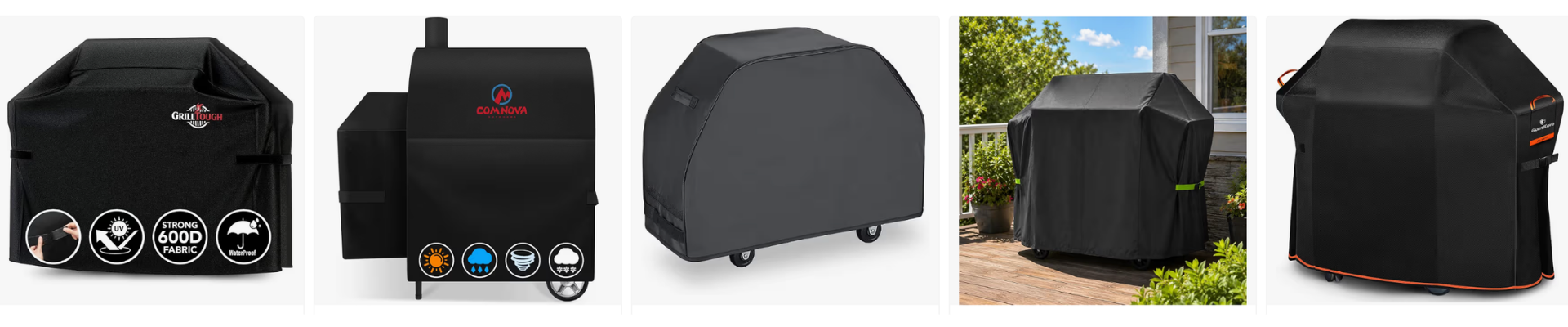
Leaving your grill exposed to the elements, rain, sun, and temperature swings, will shorten its lifespan considerably and lead to rust, faded finishes, and general wear far sooner than necessary. A properly fitted grill cover protects your investment between uses, and it’s a small, inexpensive purchase relative to the cost of the grill itself.
Look for a cover made from a durable, weatherproof material with secure straps or a drawstring to keep it from blowing off in windy conditions. This becomes especially worthwhile if your grill lives outside year-round rather than in a covered patio or garage, since consistent exposure to sun and moisture is one of the fastest ways to degrade a grill’s exterior and internal components over time.
10. Wood Chips or Chunks for Smoking Flavor
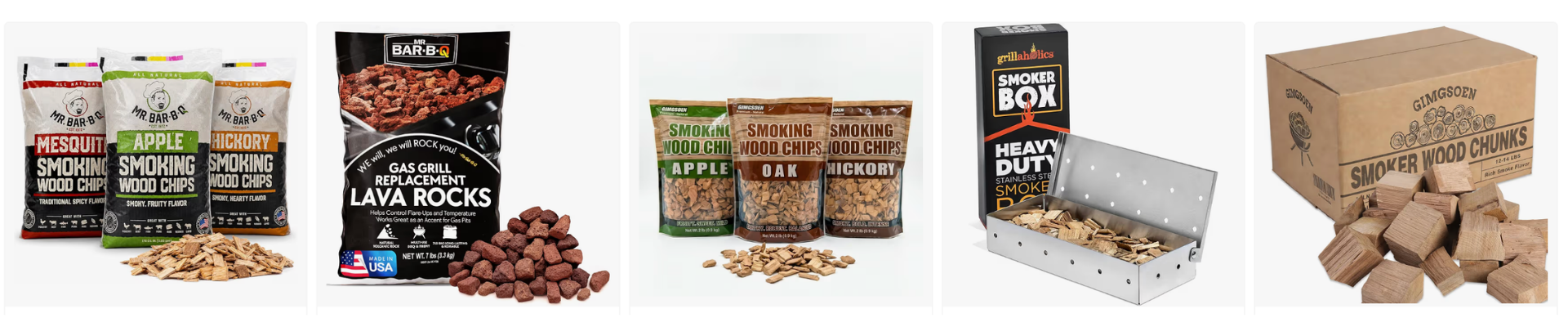
Even if you’re not using a dedicated smoker, wood chips or chunks let you add a smoky depth of flavor to food cooked on a standard charcoal or gas grill. Soaking wood chips in water before adding them to your coals, or placing them in a smoker box on a gas grill, produces smoke that infuses your food with flavor over the course of the cook without requiring separate smoking equipment.
Different wood types produce distinctly different flavor profiles, hickory and mesquite tend to be bolder and more intense, while fruit woods like apple or cherry offer a milder, slightly sweet smoke that pairs well with poultry and pork. Experimenting with different wood types is one of the easiest ways to expand your grilling repertoire without buying any additional major equipment.
11. A Cutting Board and Prep Station
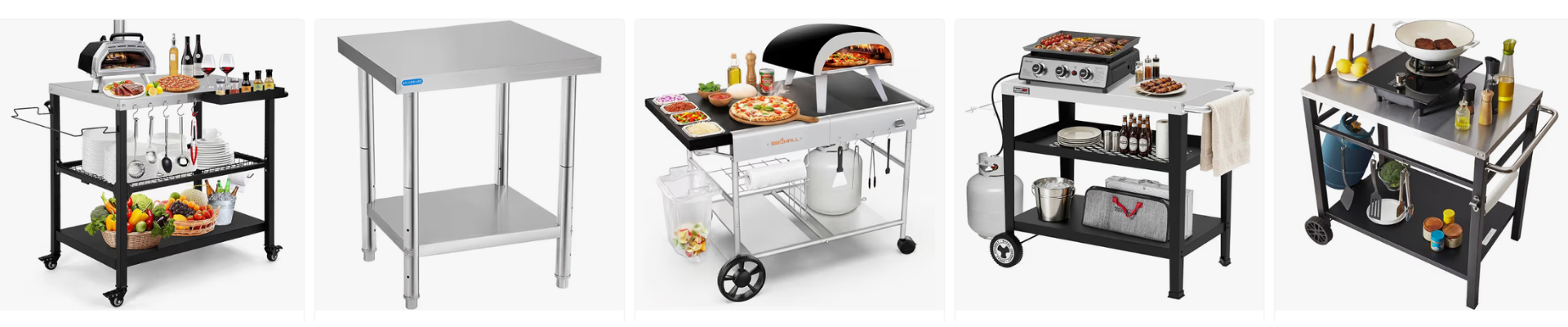
Having a dedicated outdoor prep space near your grill keeps the entire cooking process smoother, rather than making repeated trips back into the kitchen for seasoning, tools, or a place to rest cooked food. A sturdy cutting board , ideally one reserved specifically for raw meat to avoid cross-contamination, gives you a stable surface for prepping and resting food right where you’re cooking.
Some grillers invest in a small rolling cart or table specifically for this purpose, which keeps your thermometer, tools, sauces, and seasoning within easy reach throughout the cook. This kind of setup might seem like a minor convenience, but it genuinely streamlines the entire grilling process once you’re managing multiple items on the grill at different stages of doneness.
12. A Basic Seasoning and Spice Collection
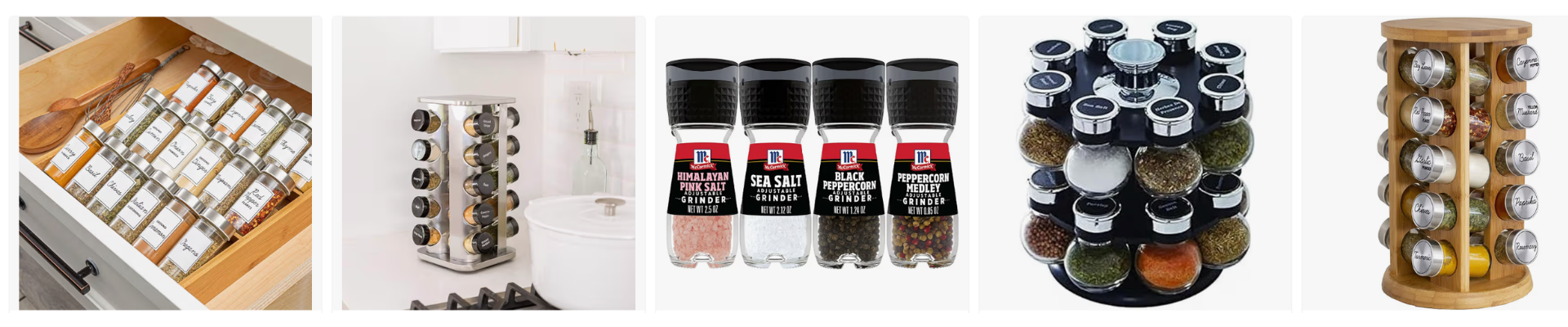
Great grilling isn’t just about technique, it’s also about flavor, and having a solid rotation of seasonings on hand makes a noticeable difference in your results. A few staples worth keeping stocked include a good all-purpose grill seasoning , coarse kosher salt , and freshly cracked black pepper , along with a couple of specialty rubs suited to whatever proteins you find yourself grilling most often.
Beyond dry seasoning, having a base for a few simple marinades or sauces, like olive oil , vinegar , and a couple of go-to barbecue sauces , gives you flexibility without needing to run to the store every time you plan to grill. Building this collection gradually, based on what you actually enjoy cooking, is more useful than buying an overwhelming variety of seasonings you’ll rarely reach for.
13. A Fire Extinguisher or Baking Soda Nearby
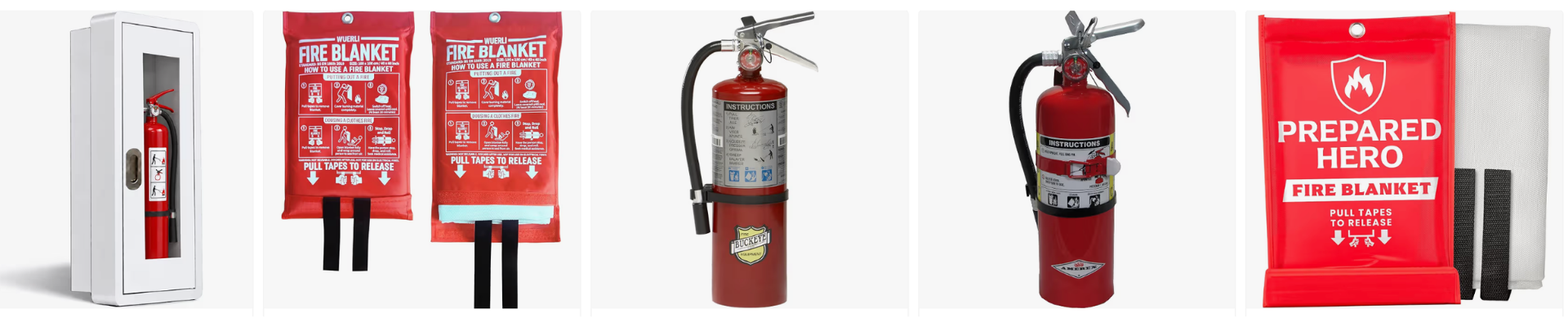
Safety is easy to overlook when you’re focused on flavor and technique, but having a fire extinguisher rated for grease fires, or even just a box of baking soda, within reach of your grill is a genuinely important precaution. Flare-ups are common, especially with fattier cuts of meat, and while most are minor and manageable, having a quick response option nearby prevents a small flare-up from becoming a bigger problem.
This is one of those items you hope to never actually need, but its absence is the kind of oversight that turns a manageable situation into a dangerous one. Keeping it in a consistent, easily accessible spot near your grilling area, rather than buried in a garage cabinet, ensures it’s actually useful in the rare moment you need it quickly.
Final Thoughts
You don’t need every item on this list to start grilling well, a good grill , a reliable thermometer , and a solid set of tools will get you through the vast majority of what you’ll want to cook. From there, build out your setup gradually based on the techniques and flavors you find yourself gravitating toward, whether that’s smoking with wood chips, mastering two-zone cooking, or expanding your seasoning collection.
Grilling rewards practice more than perfect equipment, but having the right foundation makes that practice a lot more enjoyable, and a lot more delicious, from the very first cookout.